Carrythe last light.
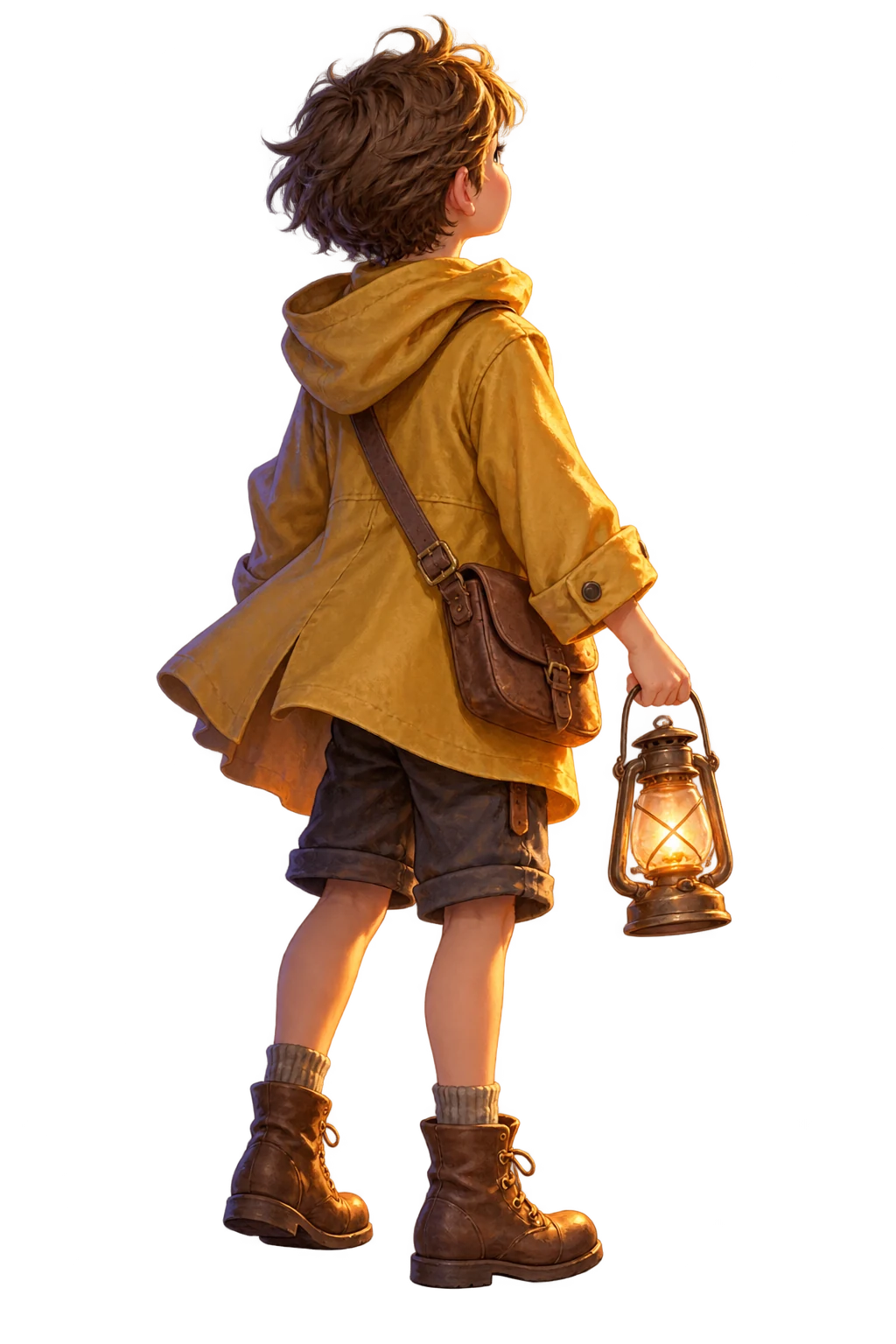
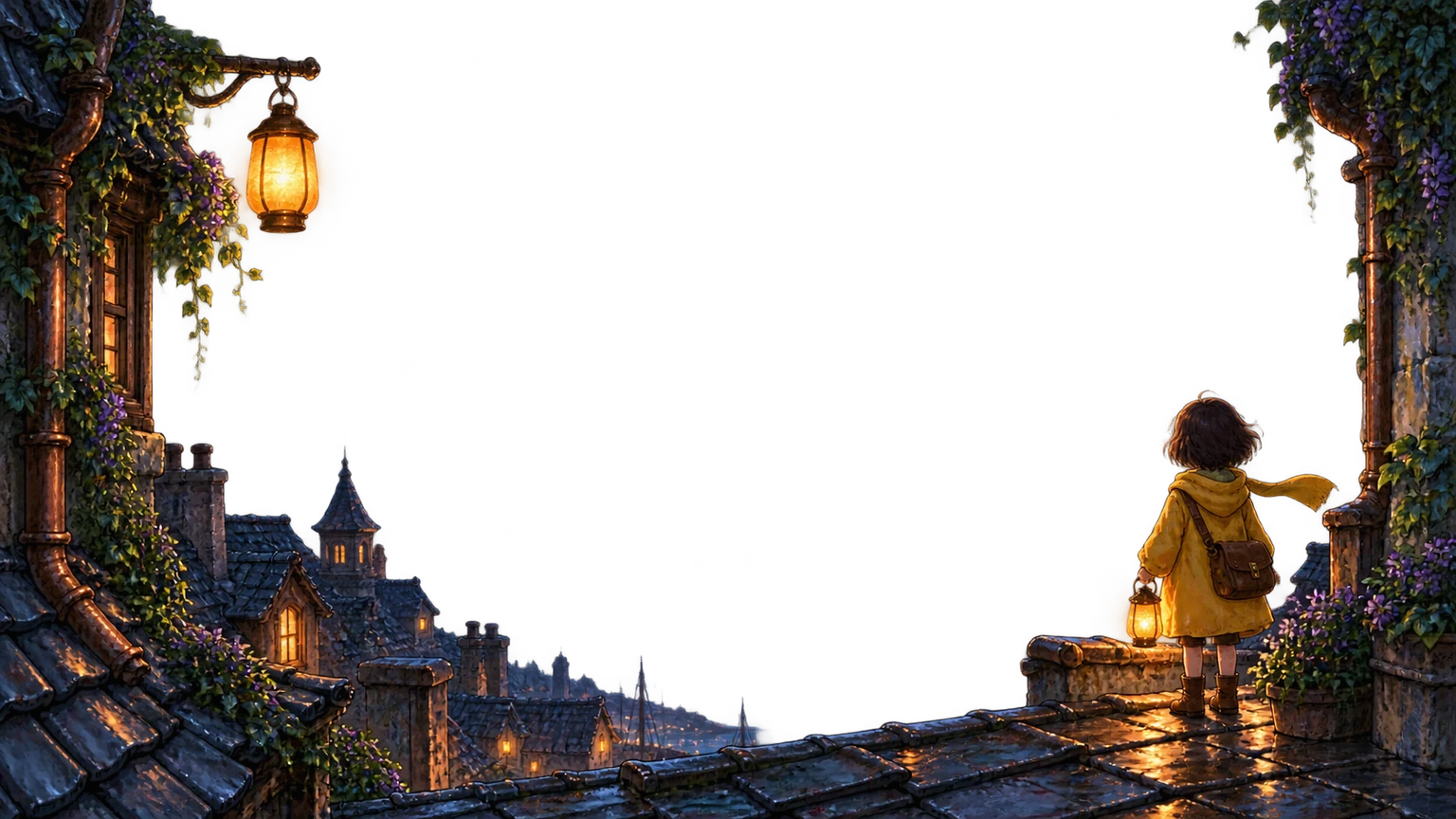
Scroll to exploreBy evening, the storm had taken every light in the town except one. Mio, the youngest lantern courier, lifted her grandmother’s brass lantern from the table.
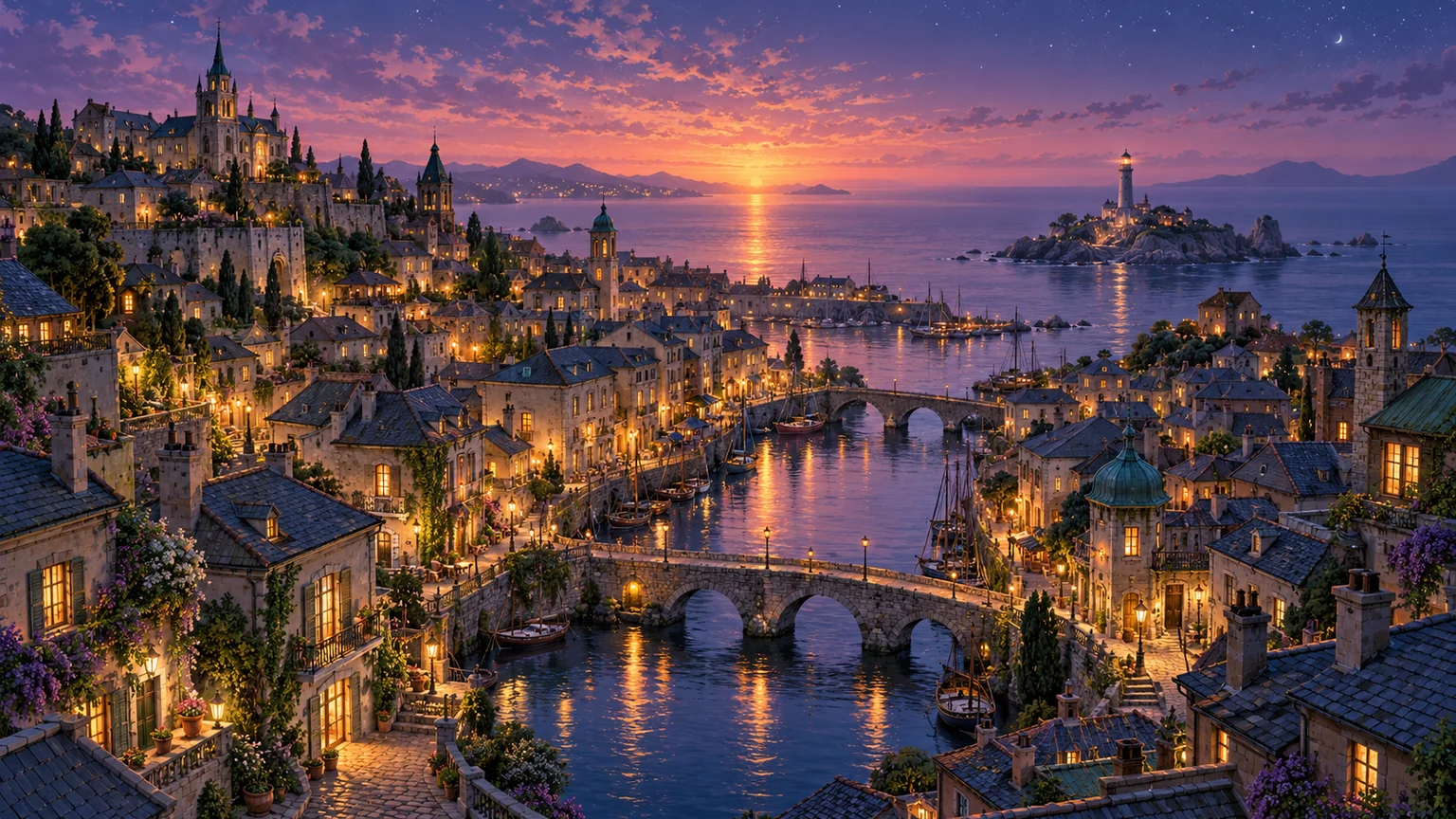
Beyond the harbor wall, the lighthouse stood black. Three fishing boats waited outside the reef; without its beam, their captains dared not enter the narrow passage.
Her grandmother had carried this lantern up the cliff whenever the power failed. Since her funeral in winter, Mio had polished its handle, but never climbed the path.
She tied her grandmother’s scarf beneath her chin and left the house unlocked. On the doorstep, she almost called goodbye, then listened to the empty kitchen.
The baker stood in his dark doorway. He slipped warm bread into her pocket, saying nothing about how far the lighthouse seemed tonight.
The ferryman gave her some red cord. “Tie the lantern to your wrist,” he said. “Up there, the wind has quick hands.”
The old tailor fastened her coat button, missing the hole twice because his fingers were cold. Mio held the lantern so he could see.
At the first bend, she looked back. Pale faces watched from the street, each briefly visible in the swaying light. Then the houses disappeared.
Above the roofs, the path narrowed to steps cut into the cliff. Rain filled their hollows; her shoes carried cold pools from one to the next.
Halfway up, she found the spot where her grandmother used to rest. There was no bench, only a flat stone with one edge worn smooth.
Mio sat beside that edge and broke the bread in two. She held out the larger piece before remembering there was no one there.
She ate both pieces slowly. Below, three small bells sounded across the water: the boats calling toward the shore, where no light had answered.
The lighthouse door dragged over the wet floor. Its spiral stairs smelled of salt and iron. Mio counted twelve steps, lost count, and kept climbing.
The main lamp was cold. An oil bowl waited beneath the lens. Mio recognized the spare wick her grandmother had braided from cotton.
She touched the lantern’s flame to the braided wick. A draft almost flattened it. Mio waited, holding her breath, until a second flame caught.
For one breath, both flames burned. Then the lantern went out, its oil spent. Above it, the great lens slowly filled with gold.
Mio leaned her weight against the turning handle. A wide bar of light crossed the water, showing rain, then waves, then nothing at all.
She turned again. A white sail appeared at the beam’s edge. It vanished, returned, and dipped toward the opening between the rocks.
The bells rang once, twice, three times. Mio counted each answer on her fingers. Only afterward did she notice that she was crying.
Nobody stood beside her to hear the news. She laid her palm on the brass lantern, still warm, and waited until the warmth faded.
At dawn, all three boats lay safely in the harbor. Someone had brought fresh oil to the tower; someone else waited with a dry coat.
Descending, Mio passed the flat stone again. She rested, leaving room beside her, then noticed tiny white flowers growing in its crack.
The baker’s daughter waited on her doorstep with a candle. Behind her, neighbors held jars and chipped cups, each with a wick inside.
Mio opened the lantern, refilled and relit at the tower. She lit the waiting wicks. By breakfast, the light had more homes than she could count.